
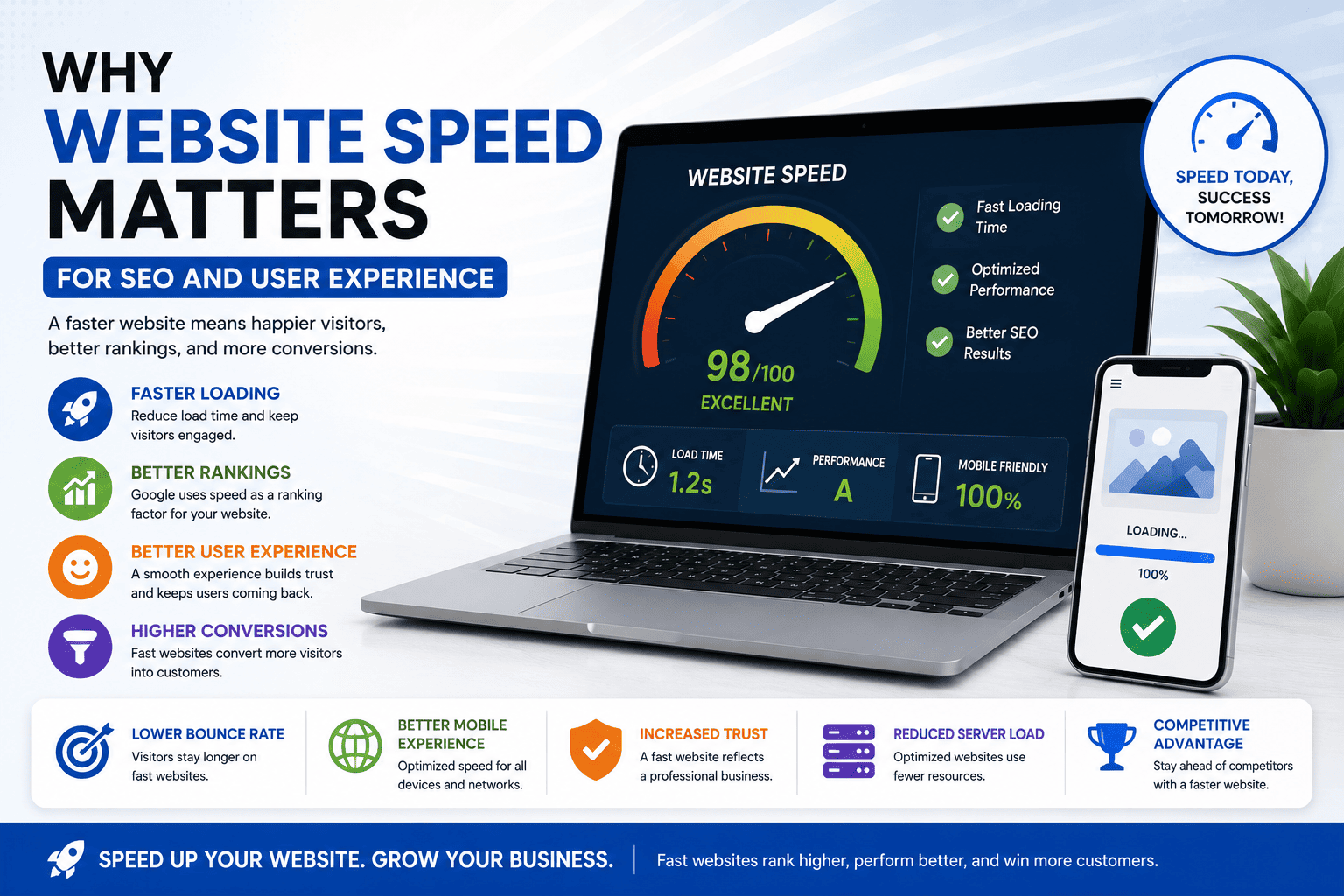

Why Website Speed Matters for SEO and User Experience
In today's fast-paced digital world, website visitors expect pages to load almost instantly. If your website takes too long to load, visitors may leave before they even see your content. This not only affects your potential customers but also impacts your search engine rankings.
Website speed is one of the most important factors in creating a successful online presence. A fast website provides a better user experience, improves SEO, increases engagement, and helps convert more visitors into customers.
Let's explore why website speed matters and how you can improve it.
What Is Website Speed?
Website speed refers to how quickly your web pages load and become interactive for visitors. It includes several performance metrics such as page load time, server response time, and Core Web Vitals.
The faster your website loads, the better the experience for your users.
1. Website Speed Improves User Experience
Visitors don't like waiting.
A fast-loading website helps users:
- Access information quickly
- Navigate smoothly
- Complete forms easily
- Browse multiple pages
- Stay engaged longer
A positive experience encourages visitors to return.
2. Google Uses Speed as a Ranking Factor
Google considers page speed when ranking websites.
Fast websites are more likely to:
- Rank higher in search results
- Be crawled efficiently
- Provide better page experience
- Meet Core Web Vitals requirements
Improving website speed can positively influence your SEO performance.
3. Lower Bounce Rates
If a website loads slowly, visitors often leave without interacting with it.
A faster website reduces bounce rates by encouraging users to explore more pages instead of leaving immediately.
Lower bounce rates also send positive signals to search engines.
4. Higher Conversion Rates
Every second counts.
Whether your goal is to generate enquiries, sell products, or encourage bookings, faster websites typically convert better because visitors can complete actions without unnecessary delays.
Improved speed often leads to:
- More enquiries
- More purchases
- More contact form submissions
- Better customer satisfaction
5. Better Mobile Performance
Most website traffic now comes from mobile devices.
Fast mobile websites:
- Load efficiently on slower networks
- Improve the browsing experience
- Reduce frustration
- Increase engagement
Mobile performance is essential for both SEO and customer satisfaction.
6. Improved Core Web Vitals
Google's Core Web Vitals measure the quality of user experience.
These include:
- Largest Contentful Paint (LCP)
- Interaction to Next Paint (INP)
- Cumulative Layout Shift (CLS)
Optimizing your website for these metrics improves both usability and search performance.
7. Stronger Business Reputation
A slow website can make your business appear outdated or unreliable.
A fast website demonstrates professionalism and creates a positive first impression, increasing customer confidence.
8. Reduced Server Load
Performance optimization also benefits your hosting environment.
Efficient websites consume fewer server resources, helping maintain stability during periods of high traffic.
9. Better Accessibility
Fast-loading websites are easier to use for everyone, including visitors with slower internet connections or older devices.
Performance improvements make your website more inclusive and accessible.
10. Competitive Advantage
Many businesses still operate slow websites.
A faster website helps you:
- Keep visitors engaged
- Improve customer satisfaction
- Increase conversions
- Stay ahead of competitors
Performance can become a significant competitive advantage.
How to Improve Website Speed
Here are some practical ways to improve performance:
- Compress and optimize images.
- Enable browser caching.
- Use a reliable hosting provider.
- Minify CSS, JavaScript, and HTML.
- Remove unnecessary plugins.
- Enable GZIP or Brotli compression.
- Use a Content Delivery Network (CDN).
- Implement lazy loading for images.
- Keep your CMS, themes, and plugins updated.
- Regularly monitor website performance.
Tools to Test Website Speed
You can measure your website's performance using:
- Google PageSpeed Insights
- Google Lighthouse
- GTmetrix
- Pingdom Website Speed Test
- WebPageTest
These tools identify performance issues and provide recommendations for improvement.
Final Thoughts
Website speed is no longer just a technical consideration—it's a critical part of your online success. A fast website enhances user experience, improves SEO, increases conversions, and strengthens your brand's credibility.
Investing in website performance ensures that your visitors enjoy a seamless experience while helping your business achieve better results online.
Frequently Asked Questions
Why is website speed important?
A fast website improves user experience, search engine rankings, and conversion rates while reducing bounce rates.
Does website speed affect SEO?
Yes. Google considers page speed and overall page experience when ranking websites.
What is a good page load time?
Ideally, a webpage should load in under three seconds, with faster load times providing a better user experience.
How can I check my website speed?
You can use tools such as Google PageSpeed Insights, GTmetrix, or Lighthouse to analyze your website's performance.
Can slow hosting affect website speed?
Yes. Choosing reliable, high-performance hosting is one of the most important factors in improving website speed.
Speed Up Your Website with WebDesignKart
A slow website can cost you visitors, leads, and sales. At WebDesignKart, we optimize websites for speed, performance, and SEO to deliver a better experience for your users and improve your online results.
📞 Contact WebDesignKart today for a free website performance audit and discover how a faster website can help grow your business.
This is Article 1 of the final 6. After you publish it, I'll provide Article 2: "Static vs Dynamic Website: Which One is Right for Your Business?"