

Website Design in India: A Complete Guide for Businesses in 2026
A professional website has become one of the most important assets for businesses in India. Whether you operate a startup, local business, ecommerce store, consultancy, or established company, your website often serves as the first impression potential customers have of your brand.
As consumers increasingly search online before making purchasing decisions, businesses need websites that not only look professional but also provide a seamless user experience, generate leads, and support long-term growth.
In this guide, we'll explore the importance of website design in India, the key elements of a successful website, and how businesses can use modern web design to achieve their goals.
Why Website Design Matters
Your website represents your business online.
When visitors land on your website, they quickly form opinions about your brand based on:
- Design quality
- Page speed
- Mobile experience
- Navigation
- Content presentation
A poorly designed website can cause visitors to leave within seconds, while a professional website can increase trust and encourage engagement.
Good website design helps businesses:
- Build credibility
- Generate leads
- Improve conversions
- Increase visibility
- Strengthen brand identity
A website is often the foundation of a company's digital marketing strategy.
The Growth of Digital Business in India
India continues to experience rapid digital growth.
Consumers use search engines daily to find:
- Products
- Services
- Local businesses
- Professional consultants
- Healthcare providers
- Educational institutions
Businesses that maintain a strong online presence are better positioned to attract and convert potential customers.
A professionally designed website helps ensure your business remains competitive in an increasingly digital marketplace.
First Impressions Matter
Research consistently shows that users form opinions about a website within seconds.
A modern website should immediately communicate:
- Professionalism
- Trustworthiness
- Expertise
- Reliability
Visitors are more likely to engage with businesses that present themselves professionally online.
An outdated or poorly designed website can negatively impact customer confidence.
Responsive Design is Essential
Today, a significant percentage of website traffic comes from smartphones and tablets.
Responsive design ensures that a website functions properly across:
- Mobile phones
- Tablets
- Laptops
- Desktop computers
A responsive website automatically adjusts its layout to provide an optimal viewing experience regardless of screen size.
This improves usability and helps businesses reach a wider audience.
Website Speed Impacts User Experience
Visitors expect websites to load quickly.
Slow websites often experience:
- Higher bounce rates
- Lower engagement
- Reduced conversions
Website speed also influences search engine rankings.
Businesses should focus on:
- Optimized images
- Fast hosting
- Efficient coding
- Performance optimization
A faster website creates a better experience for users and supports stronger online visibility.
User Experience Drives Conversions
User experience (UX) refers to how visitors interact with a website.
A well-designed website should make it easy for users to:
- Find information
- Navigate pages
- Contact the business
- Request services
- Make purchases
Clear navigation and logical page structures improve usability and increase conversion opportunities.
The Importance of SEO-Friendly Design
A website should be designed with search engines in mind.
SEO-friendly websites typically include:
- Clean site architecture
- Fast page speeds
- Mobile responsiveness
- Optimized content
- Proper heading structures
- Internal linking
Combining strong design with SEO best practices helps businesses attract more organic traffic.
Without SEO, even the most attractive website may struggle to generate visibility.
Content Plays a Major Role
Design and content must work together.
Visitors come to your website seeking information.
Effective website content should:
- Explain services clearly
- Address customer needs
- Answer common questions
- Encourage action
High-quality content improves both user experience and search engine performance.
Essential Pages Every Business Website Needs
Most professional business websites should include:
Home Page
Introduces the business and highlights key services.
About Us Page
Builds trust by sharing company information and experience.
Services Page
Explains products or services in detail.
Contact Page
Provides visitors with easy ways to reach the business.
Blog Section
Supports SEO and helps establish industry expertise.
Having these core pages creates a strong foundation for business growth.
Website Design Trends in India
Modern businesses are increasingly adopting new web design trends.
Popular trends include:
Mobile-First Design
Websites are designed primarily for mobile users before desktop users.
Minimalist Layouts
Simple, clean designs improve readability and user experience.
Fast Performance
Businesses prioritize website speed and efficiency.
Strong Visual Branding
Consistent branding helps businesses build recognition and trust.
Interactive Features
Modern websites often include chat systems, enquiry forms, and dynamic content.
These trends help create engaging and effective user experiences.
Ecommerce Website Growth in India
The ecommerce industry continues to grow rapidly.
Businesses selling products online need websites that provide:
- Secure payment processing
- Mobile responsiveness
- Fast loading speeds
- Product management
- User-friendly navigation
A professionally designed ecommerce website can significantly increase sales opportunities.
WordPress: A Popular Choice for Businesses
WordPress powers millions of websites worldwide and remains one of the most popular website platforms.
Benefits include:
- Easy content management
- SEO-friendly structure
- Scalability
- Flexibility
- Extensive customization options
Many Indian businesses choose WordPress because it provides a balance of functionality and affordability.
Common Website Design Mistakes
Businesses often make mistakes that negatively impact performance.
Common issues include:
- Slow page speeds
- Outdated designs
- Poor mobile optimization
- Weak calls-to-action
- Confusing navigation
- Lack of SEO planning
Addressing these issues can improve both user experience and conversion rates.
Why Professional Website Design Matters
While website builders allow businesses to create basic websites, professional web design provides significant advantages.
Professional designers focus on:
- User experience
- Conversion optimization
- SEO readiness
- Mobile responsiveness
- Long-term scalability
A professionally developed website often generates stronger business results compared to generic templates.
Choosing the Right Web Design Company
When selecting a web design company, businesses should consider:
- Experience
- Portfolio quality
- Technical expertise
- SEO knowledge
- Ongoing support
The right web design partner can help businesses create a website that supports both current needs and future growth.
Why Businesses Choose WebDesignKart
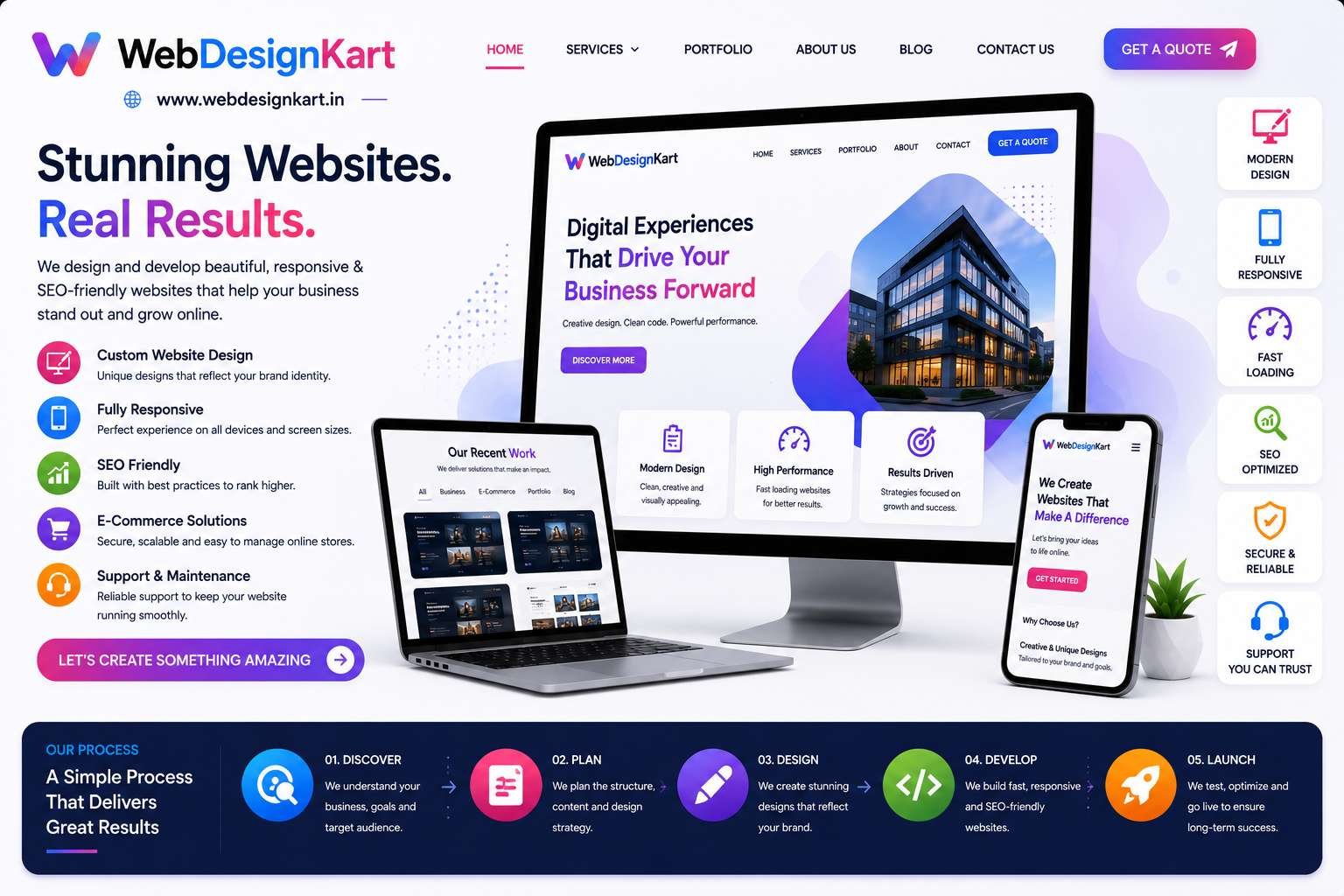
WebDesignKart helps businesses across India create modern, responsive, and conversion-focused websites.
Our services include:
- Website Design
- WordPress Development
- Ecommerce Website Development
- Website Redesign
- Responsive Web Design
- Custom Website Solutions
We build websites that help businesses improve visibility, attract customers, and support long-term growth.
Conclusion
A professional website is one of the most valuable investments a business can make in today's digital landscape.
As competition continues to increase, businesses that prioritize website design, user experience, and SEO are better positioned to attract customers and generate leads.
Whether you're launching a new website or upgrading an existing one, investing in professional web design can create lasting benefits for your business.
A well-designed website doesn't just look good—it helps your business grow.