Custom Website Development Services in India
Plan a custom website around your workflows, content structure, integrations and customer enquiry requirements.
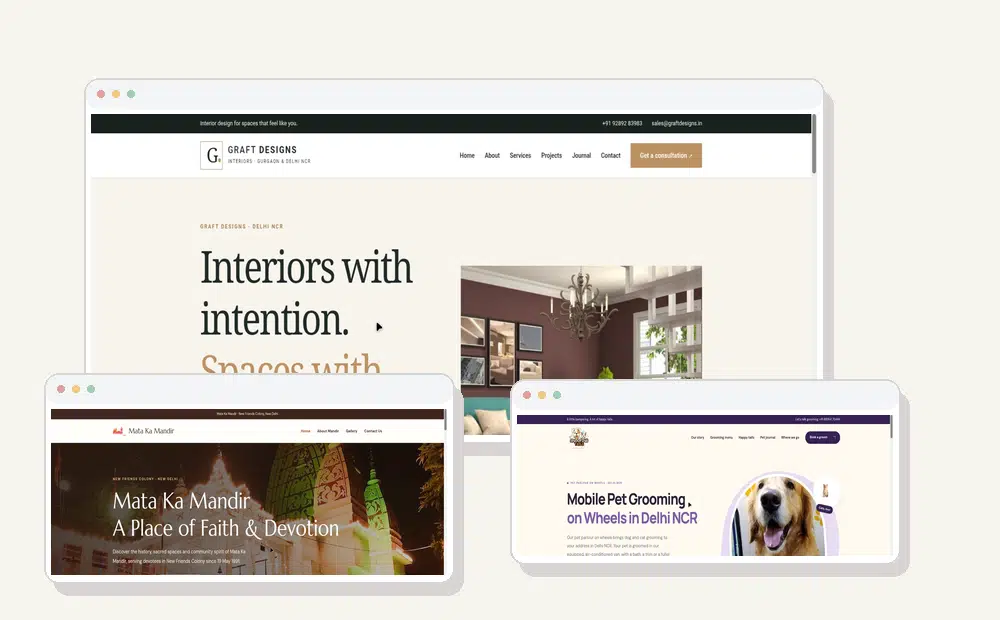
When an off-the-shelf template cannot support your workflow, WebDesignKart develops custom websites for Indian businesses with tailored page structures, role-specific features and integrations defined around real operational requirements.
Start With the Workflow, Not the Technology
We identify the people using the site, the information they need and the actions they must complete. That discovery helps determine whether a customised CMS, bespoke website or full web application is the right level of investment.
Why Businesses Choose Custom Website Development
A generic theme can force a business to change its workflow to fit a template. That creates awkward navigation, duplicate data entry and expensive workarounds. A successful project begins by identifying where users get stuck, which data matters and how the finished solution will be maintained. We recommend a proportionate approach instead of adding features that increase cost without helping customers or staff.
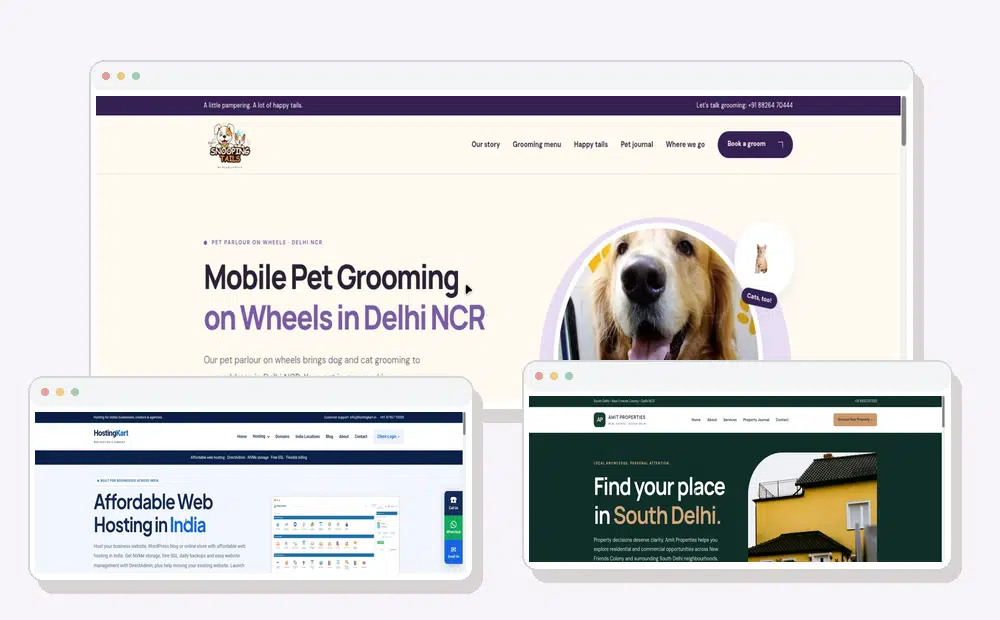
What We Build and What Is Included
The precise deliverables depend on your requirements. For custom website development, a proposal may include the following workstreams, each defined in the written scope rather than assumed to be unlimited:
Content architecture for services, locations, teams, case studies and product information
We document the requirements for content architecture for services, locations, teams, case studies and product information before implementation, including who uses it, what information it depends on and how it should behave on desktop and mobile. Acceptance criteria help distinguish an agreed deliverable from a future enhancement.
Purpose-built page templates and reusable content components
We document the requirements for purpose-built page templates and reusable content components before implementation, including who uses it, what information it depends on and how it should behave on desktop and mobile. Acceptance criteria help distinguish an agreed deliverable from a future enhancement.
Enquiry journeys with conditional fields and clear confirmation states
We document the requirements for enquiry journeys with conditional fields and clear confirmation states before implementation, including who uses it, what information it depends on and how it should behave on desktop and mobile. Acceptance criteria help distinguish an agreed deliverable from a future enhancement.
Custom administration controls for content that changes regularly
We document the requirements for custom administration controls for content that changes regularly before implementation, including who uses it, what information it depends on and how it should behave on desktop and mobile. Acceptance criteria help distinguish an agreed deliverable from a future enhancement.
Search-friendly URL planning, redirects and structured page templates
We document the requirements for search-friendly url planning, redirects and structured page templates before implementation, including who uses it, what information it depends on and how it should behave on desktop and mobile. Acceptance criteria help distinguish an agreed deliverable from a future enhancement.

Migration planning when replacing an older website
We document the requirements for migration planning when replacing an older website before implementation, including who uses it, what information it depends on and how it should behave on desktop and mobile. Acceptance criteria help distinguish an agreed deliverable from a future enhancement.
Who This Service Is Best Suited For
This service is particularly relevant to companies whose website must reflect an unusual sales journey, complex information structure or distinctive brand. It may be unnecessary when an existing platform already meets the requirements reliably. During discovery, we compare the simplest viable approach with a more tailored build and explain the maintenance implications of each option.
Manufacturing and B2B
Organise capabilities, materials, certifications and product families so procurement teams can find specifications and request quotations. For a custom website development project, we would map the relevant user journey, content or data fields, and success criteria before proposing screens or functionality. This keeps the project grounded in the industry's actual workflow.
Professional services
Present practice areas, partner profiles, proof of expertise and location-specific contact journeys without repeating the same content. For a custom website development project, we would map the relevant user journey, content or data fields, and success criteria before proposing screens or functionality. This keeps the project grounded in the industry's actual workflow.
Hospitality and travel
Connect room or tour information with booking enquiries, seasonal offers and multilingual content when the scope requires it. For a custom website development project, we would map the relevant user journey, content or data fields, and success criteria before proposing screens or functionality. This keeps the project grounded in the industry's actual workflow.

Discovery and requirements
Start by identifying who uses the solution, which decisions it supports and what success should look like. scoping custom content models, reusable layouts and enquiry paths are considered before selecting features or technologies.
Information and workflow design
Next, the project plan defines the sequence of user actions and the information each screen or process must handle. This includes scoping custom content models, reusable layouts and enquiry paths and how changes will be maintained.
Development and integration
Implementation follows the approved requirements, with particular attention to business workflows and content structures. Dependencies and integration responsibilities are documented so changes can be reviewed.
Quality assurance
Before launch, the team reviews testing editorial workflows, forms and responsive templates. This helps identify practical issues before customers or staff depend on the finished solution.
Launch and improvement
Release planning includes content checks, redirects where relevant, monitoring and a handover. Future improvements should respond to real usage and changing business requirements.
Technology and Architecture Decisions
The stack may be PHP, WordPress with custom development, or a JavaScript framework. The decision depends on editing needs, hosting constraints, integrations and long-term maintenance. We also consider data portability, deployment constraints, administrator experience and the availability of future maintenance support. The goal is to select a stack the business can operate responsibly.
Performance, Technical SEO and Accessibility
A custom website development project should make important public content accessible through clear URLs and readable page structure. We plan one primary heading per page, descriptive page titles, relevant meta descriptions, canonical handling, internal navigation and sitemap coverage where applicable. Responsive images, sensible script loading, accessible form labels and keyboard-friendly interactions are considered during implementation. Search rankings and performance scores are not guaranteed; they depend on the final content, hosting, integrations and competition.
Pricing and Project Estimates
Custom Website Development starts at ₹19,999 for a limited, clearly defined scope. The final quotation depends on the number of screens or templates, data structures, user roles, integrations, content migration, testing and support requirements. Domain registration, hosting, paid software, third-party API charges and ongoing maintenance are separate unless the proposal expressly includes them.
What Can Affect the Final Cost
For a custom website development project, additional functionality should be scoped against the actual user tasks rather than added as a standard feature list. We would map the required inputs, roles, outputs and integrations first, then decide whether custom architecture and functional requirements calls for a content-managed website, a custom application or a focused integration. This keeps the build proportionate to the project.
Delhi and NCR
For a custom website development project, the route from the first page view to a useful enquiry or transaction should be deliberately planned. The interface should make the next action obvious, with forms and supporting information suited to custom architecture and functional requirements. Success can be evaluated through relevant actions such as qualified enquiries, bookings or completed purchases.
Mumbai and Pune
For a custom website development project, additional functionality should be scoped against the actual user tasks rather than added as a standard feature list. We would map the required inputs, roles, outputs and integrations first, then decide whether custom architecture and functional requirements calls for a content-managed website, a custom application or a focused integration. This keeps the build proportionate to the project. The final content and layout are reviewed against this page’s specific search intent.
Chennai, Ahmedabad and Jaipur
For a custom website development project, search-friendly structure starts with the questions the intended audience asks and the pages needed to answer them. Navigation, service explanations, descriptive headings and internal links should reflect custom architecture and functional requirements. Each important page should answer a distinct question, with metadata and on-page copy written for that intent.
Chandigarh, Mohali and other Indian cities
Projects for International Audiences
For a custom website development project, content and interface decisions should reflect custom architecture and functional requirements, rather than assuming one presentation works for every audience. We would confirm the intended locations, terminology, purchasing context and any language requirements before creating page templates. For custom architecture and functional requirements, this can affect calls to action, proof points and the order in which information is shown.
United States and Canada
For a custom website development project, search-friendly structure starts with the questions the intended audience asks and the pages needed to answer them. Navigation, service explanations, descriptive headings and internal links should reflect custom architecture and functional requirements. Each important page should answer a distinct question, with metadata and on-page copy written for that intent. The final content and layout are reviewed against this page’s specific search intent.
United Kingdom and Europe
For a custom website development project, content and interface decisions should reflect custom architecture and functional requirements, rather than assuming one presentation works for every audience. We would confirm the intended locations, terminology, purchasing context and any language requirements before creating page templates. For custom architecture and functional requirements, this can affect calls to action, proof points and the order in which information is shown. The final content and layout are reviewed against this page’s specific search intent.
How This Service Connects With Other WebDesignKart Services
A custom website development project may require complementary work, but the right combination depends on the scope. Explore these related services when they solve a separate requirement:
Common Mistakes to Avoid
We agree which parts must be bespoke and which can safely use existing components. This avoids rebuilding reliable functionality merely to label a website custom. Other avoidable mistakes include approving screens before defining data requirements, leaving content migration until launch week, and relying on undocumented third-party services. We identify these risks in discovery so the project can be delivered and supported sensibly.
How long does custom website development take?
Can you support the project after launch?
Request a Development Consultation
Tell WebDesignKart what you want to build, the users it will serve and the problems it should solve. We will review the requirements and recommend whether custom website development or another approach is the most suitable starting point. Use our contact page to request a project-specific quotation.
Build Around Your Actual Business Processes
Custom development begins with the tasks customers and staff need to complete. We map user roles, approval steps, integrations and data requirements into a practical application structure rather than forcing a complex workflow into a standard website template.
Frequently Asked Questions
What should a custom website development proposal include?
A useful proposal should specify requirements discovery, reusable components and ownership of custom functionality, plus deliverables, testing responsibilities, support arrangements and any dependencies. The final scope depends on the project requirements.
Is custom development better than WordPress?
Not automatically. WordPress is often ideal for editorial websites. Custom development is justified when workflows, data models or interfaces are difficult to implement reliably with standard plugins.
Can an existing website be converted to a custom platform?
Sometimes. We first assess content export, URLs, forms, integrations and dependencies, then recommend a phased migration or selective redevelopment.
Will our team be able to update the site?
The scope can include an administration interface and documentation for the content your team needs to maintain.