
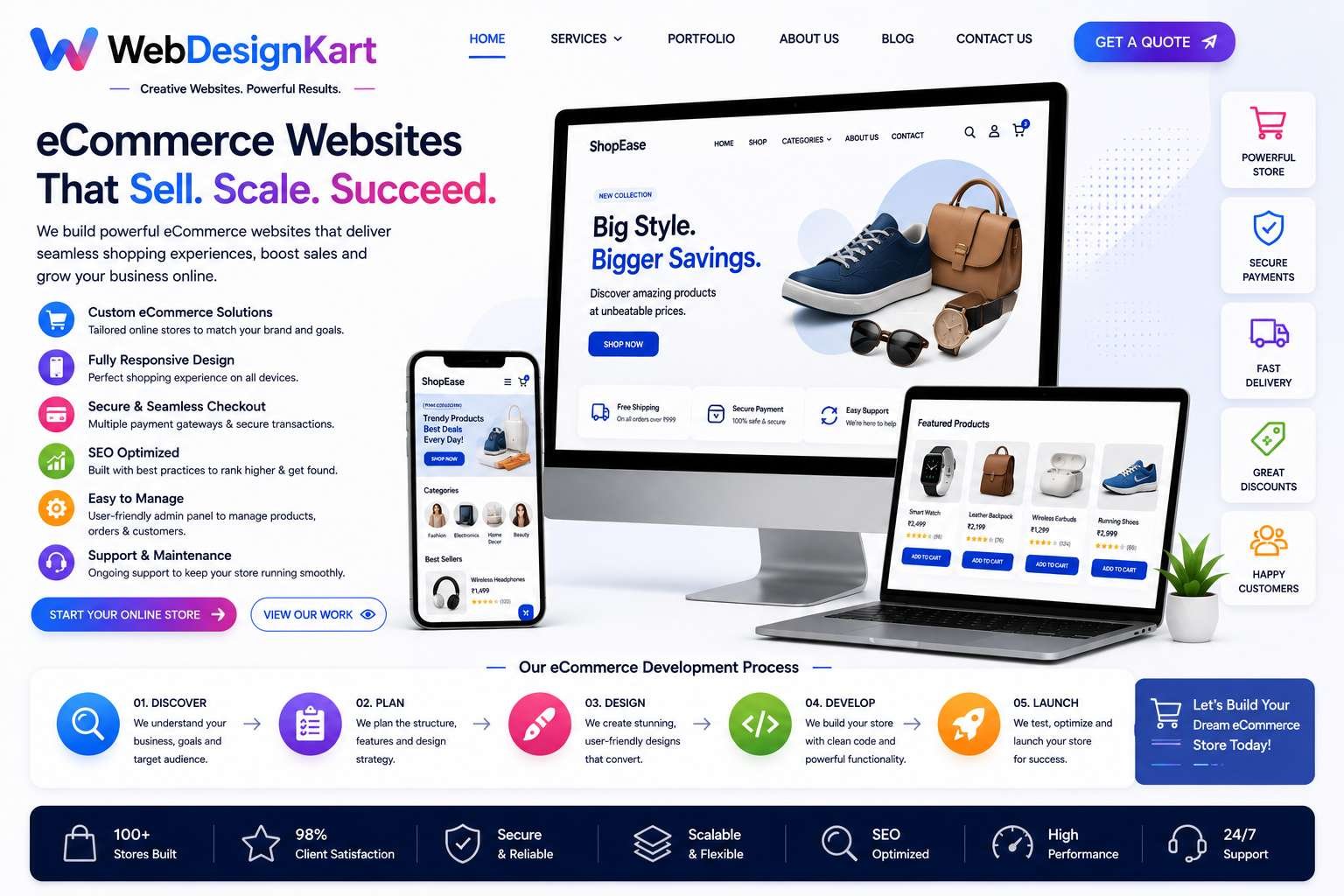

Ecommerce Website Development in India: A Complete Guide
Ecommerce has transformed the way businesses sell products and interact with customers. With increasing internet penetration, smartphone usage, and digital payment adoption, more consumers than ever are choosing to shop online.
For businesses in India, an ecommerce website offers an opportunity to reach customers beyond geographical limitations and generate sales around the clock.
Whether you're starting a new online store or expanding an existing business, investing in professional ecommerce website development can help create a strong foundation for growth.
In this guide, we'll explore everything businesses need to know about ecommerce website development in India.
The Growth of Ecommerce in India
India's ecommerce industry has experienced tremendous growth over the last decade.
Consumers now purchase a wide range of products online, including:
- Electronics
- Clothing
- Home decor
- Health products
- Educational materials
- Business services
The convenience of online shopping has made ecommerce an essential sales channel for businesses of all sizes.
Companies that invest in ecommerce websites can access larger markets and serve customers throughout India and beyond.
What is Ecommerce Website Development?
Ecommerce website development is the process of creating an online store that allows businesses to display products, process payments, manage orders, and interact with customers.
Unlike standard business websites, ecommerce websites require specialized features such as:
- Product catalogs
- Shopping carts
- Payment gateways
- Customer accounts
- Inventory management
- Order tracking
These features work together to create a seamless shopping experience.
Benefits of an Ecommerce Website
A professionally developed ecommerce website provides numerous advantages.
Sell 24/7
Unlike physical stores, ecommerce websites remain available at all times.
Customers can browse products and make purchases whenever it's convenient for them.
Reach More Customers
Businesses are no longer limited to a specific city or region.
An ecommerce website allows companies to serve customers across India and internationally.
Lower Operating Costs
Compared to maintaining physical retail locations, ecommerce websites often require lower operational expenses.
Better Customer Convenience
Online shopping allows customers to compare products, read reviews, and complete purchases from the comfort of their homes.
Essential Features of an Ecommerce Website
Successful ecommerce websites include features that improve usability and encourage purchases.
Product Management
Businesses should be able to:
- Add products
- Update pricing
- Manage inventory
- Organize categories
Efficient product management helps maintain an accurate and user-friendly store.
Shopping Cart Functionality
Customers need a simple way to:
- Add products
- Review selections
- Modify quantities
- Complete purchases
A smooth shopping cart experience can significantly improve conversions.
Secure Payment Gateway
Security is critical for ecommerce success.
Popular payment options may include:
- Credit cards
- Debit cards
- UPI
- Net banking
- Digital wallets
Secure payment processing helps build trust with customers.
Order Management
Businesses should be able to track:
- Orders
- Payments
- Deliveries
- Customer information
Efficient order management improves customer satisfaction and operational efficiency.
Mobile Commerce is Growing
A large percentage of online purchases in India now occur through smartphones.
This makes mobile optimization essential.
An ecommerce website should:
- Load quickly
- Display correctly on mobile devices
- Provide easy navigation
- Offer simple checkout processes
Mobile-friendly ecommerce websites generally achieve better engagement and conversion rates.
Ecommerce Website Design Best Practices
Good design directly impacts sales performance.
Businesses should focus on:
Clear Navigation
Visitors should easily find products and categories.
High-Quality Images
Professional product images help customers make purchasing decisions.
Fast Loading Speeds
Slow websites often experience abandoned shopping carts.
Strong Calls-to-Action
Buttons such as:
- Buy Now
- Add to Cart
- Shop Now
help guide customers through the purchasing process.
SEO for Ecommerce Websites
Search engine optimization can significantly increase ecommerce traffic.
SEO strategies include:
- Product keyword optimization
- Category page optimization
- Technical SEO
- Internal linking
- Content marketing
Businesses that invest in ecommerce SEO often generate consistent organic traffic and reduce reliance on paid advertising.
Choosing the Right Ecommerce Platform
Several platforms are available for ecommerce development.
Popular options include:
WooCommerce
Ideal for businesses seeking flexibility and WordPress integration.
Shopify
Provides an easy-to-use hosted ecommerce solution.
Custom Ecommerce Solutions
Suitable for businesses with specialized requirements.
The right platform depends on budget, functionality needs, and long-term goals.
Importance of Website Security
Security is one of the most important aspects of ecommerce development.
Customers need confidence that their personal and payment information is protected.
Businesses should implement:
- SSL certificates
- Secure payment gateways
- Regular updates
- Website backups
- Security monitoring
Strong security practices help build trust and protect business operations.
Customer Experience Drives Sales
Successful ecommerce websites focus on customer experience.
Key factors include:
- Fast performance
- Easy navigation
- Clear product information
- Simple checkout processes
- Responsive support
A positive user experience increases conversions and encourages repeat purchases.
Common Ecommerce Mistakes
Many businesses struggle because of avoidable errors.
Common mistakes include:
- Slow websites
- Poor mobile optimization
- Complicated checkout processes
- Weak product descriptions
- Lack of SEO planning
- Poor security practices
Addressing these issues can significantly improve performance.
Ecommerce and Business Growth
An ecommerce website can support long-term growth by helping businesses:
- Reach larger audiences
- Increase revenue
- Build brand recognition
- Expand product offerings
- Improve customer relationships
As ecommerce adoption continues to increase, businesses with strong online stores gain a significant competitive advantage.
Why Professional Ecommerce Development Matters
Professional ecommerce development ensures that a website is:
- Secure
- Scalable
- SEO-friendly
- Mobile responsive
- Conversion focused
Experienced developers help create online stores designed for long-term success.
Why Businesses Choose WebDesignKart
WebDesignKart provides ecommerce website development services for businesses across India.
Our solutions include:
- Ecommerce Website Development
- WooCommerce Development
- Responsive Ecommerce Design
- Website Optimization
- Ecommerce SEO Support
- Custom Ecommerce Solutions
We create online stores designed to attract customers, improve conversions, and support business growth.
Conclusion
Ecommerce continues to reshape the way businesses operate and sell products.
A professionally developed ecommerce website provides the tools needed to reach more customers, increase sales, and compete effectively in the digital marketplace.
By focusing on design, performance, security, mobile usability, and SEO, businesses can create online stores that support sustainable growth and long-term success.
For companies looking to build or improve an ecommerce website, investing in professional development is one of the smartest decisions they can make.