
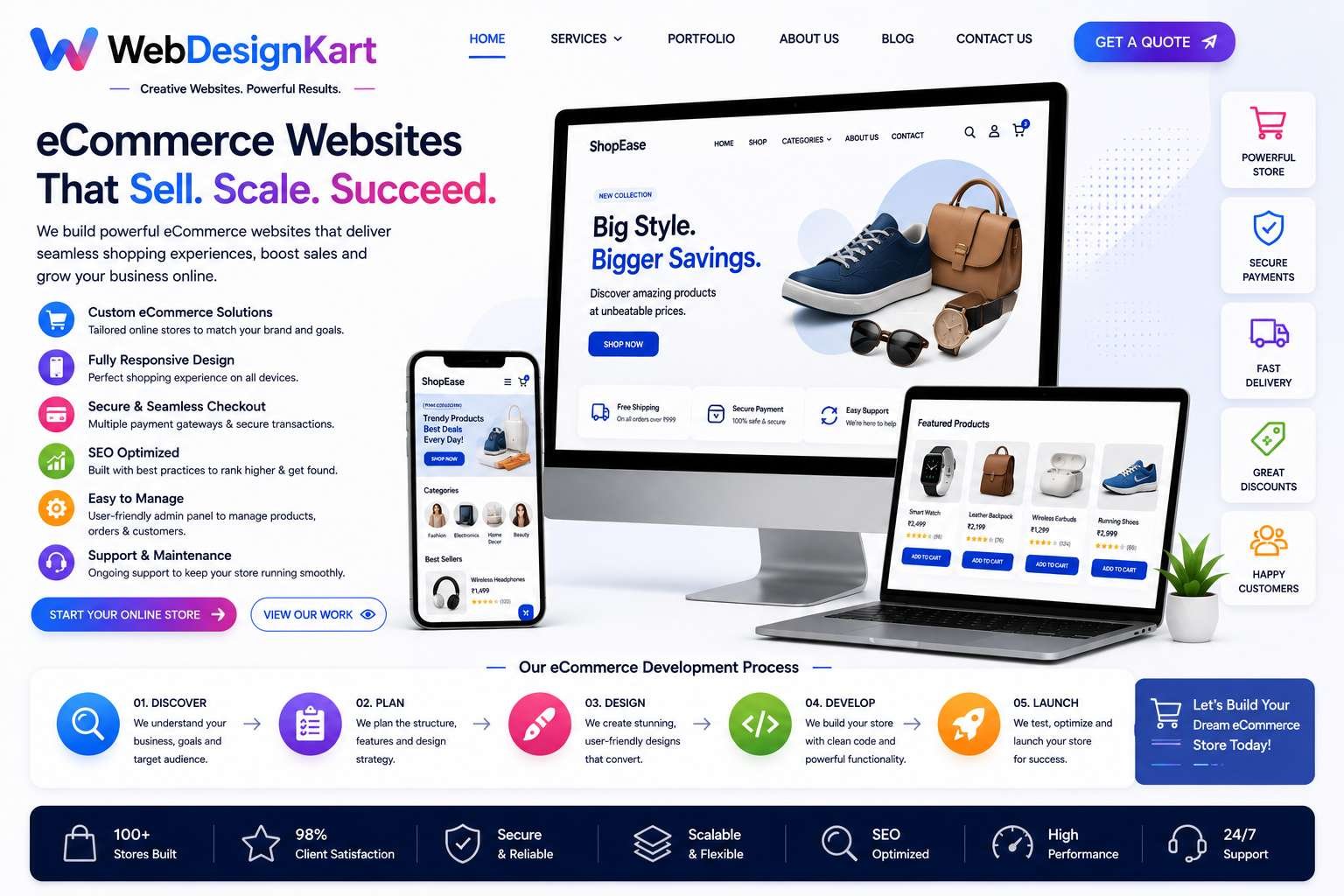

E-Commerce Website Design Tips That Increase Sales
A successful eCommerce website is more than just an online store. It is a sales platform designed to attract visitors, build trust, and convert shoppers into customers.
With increasing competition in online retail, businesses must focus on creating websites that offer exceptional user experiences and streamlined purchasing journeys.
In this guide, we'll explore the most effective eCommerce website design tips that can help increase sales and improve customer satisfaction.
Prioritize User Experience
User experience plays a critical role in online shopping.
Visitors should be able to:
- Find products quickly
- Navigate easily
- Compare options
- Complete purchases without confusion
A simple and intuitive design often leads to higher conversion rates.
Optimize for Mobile Shopping
Mobile commerce continues to grow every year.
Your online store should provide a seamless experience across:
- Smartphones
- Tablets
- Laptops
- Desktop computers
A mobile-friendly design helps reduce abandoned carts and improve customer satisfaction.
Use High-Quality Product Images
Customers cannot physically inspect products online.
High-quality images help shoppers make informed purchasing decisions.
Best practices include:
- Multiple product photos
- Zoom functionality
- Different viewing angles
- Lifestyle images
- Consistent image quality
Professional visuals can significantly influence buying behavior.
Write Clear Product Descriptions
Product descriptions should answer important customer questions.
Include:
- Key features
- Benefits
- Specifications
- Dimensions
- Usage information
Focus on helping customers understand how the product solves their problems.
Improve Website Speed
Speed is essential for eCommerce success.
Slow websites often experience:
- Higher bounce rates
- Cart abandonment
- Lower conversion rates
Speed optimization strategies include:
- Compressed images
- Efficient code
- Reliable hosting
- Caching solutions
Fast websites create smoother shopping experiences.
Simplify Navigation
Customers should be able to locate products quickly.
Effective navigation includes:
- Clear categories
- Search functionality
- Product filters
- Breadcrumb navigation
The easier it is to find products, the more likely customers are to make purchases.
Use Strong Calls-to-Action
Every product page should include clear calls-to-action.
Examples include:
- Add to Cart
- Buy Now
- Shop Now
- Get Yours Today
Calls-to-action should be visible and encourage immediate action.
Display Customer Reviews
Social proof can strongly influence purchasing decisions.
Reviews help:
- Build trust
- Reduce uncertainty
- Increase confidence
- Improve conversion rates
Encourage customers to leave honest feedback after purchases.
Build Trust Through Security
Online shoppers want assurance that their information is safe.
Trust-building elements include:
- SSL certificates
- Secure payment gateways
- Privacy policies
- Money-back guarantees
- Trust badges
Security features help reduce hesitation during checkout.
Create a Simple Checkout Process
Complicated checkout processes often result in abandoned carts.
Best practices include:
- Fewer checkout steps
- Guest checkout options
- Multiple payment methods
- Clear shipping information
- Progress indicators
The easier the checkout process, the higher the likelihood of completed purchases.
Offer Advanced Search Features
Many customers prefer searching rather than browsing.
A powerful search function should:
- Deliver accurate results
- Handle spelling mistakes
- Suggest products
- Support filtering
Search optimization improves product discovery and user satisfaction.
Highlight Best-Selling Products
Featuring popular products can encourage purchases.
Common strategies include:
- Best Sellers sections
- Trending products
- Recommended items
- Recently viewed products
These features help shoppers discover products quickly.
Reduce Cart Abandonment
Cart abandonment remains a major challenge for online stores.
Common solutions include:
- Transparent pricing
- Clear shipping costs
- Fast checkout
- Mobile optimization
- Multiple payment options
Reducing friction improves conversion rates.
Optimize for SEO
Search engine optimization helps attract targeted visitors.
Important SEO elements include:
Product Page Optimization
Create unique titles and descriptions.
Category Page Optimization
Organize products logically.
Internal Linking
Help search engines understand site structure.
Fast Loading Speed
Improve user experience and rankings.
Mobile Optimization
Support Google's mobile-first indexing.
SEO creates long-term visibility and organic traffic.
Use Personalization
Modern shoppers appreciate personalized experiences.
Examples include:
- Product recommendations
- Recently viewed items
- Personalized offers
- Customized content
Personalization can improve engagement and sales.
Monitor Analytics and Performance
Understanding customer behavior helps improve results.
Track metrics such as:
- Conversion rates
- Cart abandonment
- Revenue
- Traffic sources
- Popular products
Data-driven decisions often lead to higher sales.
Why Businesses Choose WebDesignKart
At WebDesignKart, we design high-performance eCommerce websites that help businesses attract customers and increase online sales.
Our eCommerce solutions include:
- Mobile-responsive design
- SEO-friendly development
- Fast loading speeds
- Secure payment integrations
- Conversion-focused layouts
We help businesses across the USA, UK, Canada, Australia, UAE, and India build online stores designed for growth.
Conclusion
A successful eCommerce website combines excellent design, user experience, performance, and trust-building elements.
By implementing these proven design strategies, businesses can create online stores that attract more customers, increase conversions, and drive long-term revenue growth.
Investing in a professionally designed eCommerce website can be one of the most effective ways to grow your business online.